To build a readership on Medium, make three things work together: a clear problem you help people solve, a series that takes them through that problem, and a profile that shows where to begin. A reader who enjoys one article should be able to understand what you write about and find a useful next piece. Start by designing that path before adding more unrelated topics.
Here is a practical example for a writer who knows productivity tools but has been publishing disconnected app reviews. The goal is to produce a topic statement, three linked article plans and reusable profile copy. This is a worked example, not a report of audience growth.
Turn your expertise into a reader task
“I write about productivity” describes a category. “I help small project teams turn meeting notes into work they can follow up” gives a reader a reason to return. The second statement also helps you decide what to leave out: a new calendar app only belongs if it helps that particular workflow.
Choose a reader you can picture, such as someone coordinating a small project without a dedicated project manager.
Name the moment when they get stuck: the meeting ends, but decisions are mixed with discussion and nobody knows what happens next.
Define the result your writing will help them produce: an action list with a clear owner, deadline and next review.
Test the topic against your own materials. Can you show a messy note, explain a decision and provide a usable result? If you only have opinions about tools, narrow the first article to a workflow you can actually demonstrate.
Build a series where each article finishes a job
Three articles are useful for this example because the reader faces three successive jobs. They are not a required posting formula. Each piece should work on its own; the next article adds a new result rather than withholding the current answer.
“How to turn messy meeting notes into an action list.” Show a short raw note, separate decisions from open questions, then produce a cleaned list. The reader leaves with a reusable structure.
“How to assign work without leaving the owner unclear.” Start with that list and show how to clarify the person responsible, the deliverable and the due date. Finish with an example handoff message.
“A weekly review for unfinished meeting actions.” Revisit the list, distinguish blocked work from completed work and decide what needs a new conversation. Finish with a review agenda.
A small before-and-after demonstration
Example raw note: “Onboarding page confusing. Maya to check wording? Ask support for common questions. Discuss next week.”
Example cleaned action: “Maya drafts a revised introduction by Thursday, using three recurring questions supplied by support. Review the draft at the next project meeting.”
The cleaned version contains assumptions that must be agreed with the team. That is part of the lesson: a writer should show where clarification is needed, not invent a deadline and present it as a confirmed decision. In the second article, demonstrate the message that asks Maya and support to confirm the arrangement.
Build a series where each article finishes a job
Give your profile and article endings a shared purpose
Use your short introduction to say who you help and what they can do after reading. Use your About text to introduce the series. Medium documents profile editing and pinned stories in its profile page guide; its pinning guidance includes desktop limitations. Put the reading route in article text as well, so it does not depend on a particular profile layout.
Example bio: “I write practical guides for small teams turning meeting notes into clear next actions. Start with the action-list guide, then explore task handoffs and weekly reviews.”
Example ending: “You now have an action list. If an item still has no clear owner, continue with the guide to assigning work and confirming a handoff.”
Once the next article exists, link its actual title. Until then, describe the planned topic without adding a guessed URL. When the series is complete, revisit all three endings and make sure someone arriving at the final piece can still find the starting point.
Give your profile and article endings a shared purpose
Choose topics and publications for fit
Medium’s guidance on reaching readers recommends relevant topics and suitable publications. For this series, read recent work aimed at project teams or practical workplace writing. Look for matching language, reader level and editorial expectations before proposing your draft.
A publication is an editorial collection, while your profile is your author home; Medium explains the difference between profiles and publications. Follow a publication’s actual submission instructions. Its size alone does not tell you whether your meeting-workflow article suits its readers, and submitting does not promise acceptance.
Use reader responses to choose the next useful piece
Keep followers, readers and email subscribers separate. Medium’s audience statistics guide distinguishes following from email subscription. A larger follower count alone does not show that people used your example.
If people ask what to do when nobody accepts ownership, expand the handoff example. If questions show they cannot identify a decision in the first place, improve the opening article before adding a fourth. Compare similar periods and treat small samples cautiously; one quiet post is too little evidence to abandon a topic.
A useful Pinterest Pin gives someone a reason to keep it or open its destination. Start with a practical page you already have, extract one small task, and make two distinct pieces: a complete checklist for saving and a step preview for further reading. The image, title, description and linked page should promise the same thing.
Suppose your site has a small-space organizing guide. It includes a checklist, photos showing how to sort a desk, and instructions for measuring storage spaces. This is a worked example, not a customer case. Instead of shrinking the whole article onto one image, choose the reader who wants to clear a cramped workspace. Their immediate problem is deciding what to do first; their next problem is finding a workable place for each item.
Give the two Pins different jobs
The checklist should be useful without a click. Give away the actual sequence, then invite the reader to save it for their next tidy-up. The preview should show a real part of the process and explain what the full guide adds. Hiding every useful detail behind “read more” leaves the reader with little reason to trust the destination.
Pinterest recommends relevant board placement and consistency between the Pin and its landing page. Use that as a practical design constraint: an organizing checklist belongs on a small-space organization board and should lead to organizing instructions. Pinterest’s guidance on Pin performance.
Example A: the saveable checklist
Image copy: Small-space reset Clear one surface · Group items by use · Measure the available space · Keep everyday items within reach Save this checklist for your next tidy-up.
Title: A Small-Space Organizing Checklist You Can Actually Use
Description: Start with one surface, sort what belongs there, and measure before choosing storage. Keep this checklist for later; the full guide shows how to apply it to a desk, shelf and entryway.
Board: Small-Space Organization Destination: Your existing guide, with the checklist near the beginning and the promised examples below it.
Use a clear photograph you own or are licensed to use. Keep the checklist readable on a phone; decorative objects should not compete with the instructions. A downloadable checklist can be useful, but only mention a download if the page actually provides it.
Example B: a preview with a reason to visit
Image copy: Where should everything go on a small desk? Group by use → measure the space → choose a home See the full guide for desk, shelf and entryway layouts.
Title: How to Plan Storage Zones in a Small Space
Description: Before buying another box, decide which items you use every day and measure where they will live. Open the guide for the full sorting sequence and examples of arranging each zone.
Board: Small-Space Organization Destination: The guide’s detailed process, including photos, measurements to take and examples of item placement.
Show one understandable step in the preview, such as grouping charging cables separately from stationery. The page then explains the rest. This creates a useful continuation without making the image a miniature copy of the article.
Build the Pin and connect the promise to the page
Prepare two original vertical designs with clearly different content. Pinterest recommends a 2:3 image ratio; an example working canvas is 1000 × 1500 pixels.
Upload your asset in the Pin creation flow, then add the matching title and description. Describe the reader’s task naturally instead of repeating a keyword list.
Add the real published guide URL and choose a relevant board. Do not send a specific tutorial promise to a generic homepage.
Open the destination on a phone. Confirm that the checklist and promised steps are easy to find, images are readable and the page works without a broken link.
Save your two drafts separately. Publish them as distinct useful ideas, not repeated uploads of the same image.
For the checklist, put the sequence near the start of the page. For the preview, make the detailed process easy to reach through clear headings. If the destination cannot yet deliver the promised examples, finish that section before promoting it. The official design and linking guidance supports these practical checks.
Use the right result to choose the next change
With a business account, inspect saves and outbound clicks separately. A save records keeping a Pin to a board; an outbound click goes to its destination URL. Pin clicks are a different measure and should not simply be reported as website visits. See Pinterest’s metric definitions.
The following numbers are invented solely to explain the decision. Both Pins have 1,000 impressions over the same observation period; they are not a performance benchmark or a controlled experiment.
Example
Saves
Outbound clicks
A: checklist
60 · 6% of impressions
8 · 0.8%
B: preview
20 · 2% of impressions
30 · 3%
If the goal is a reference people keep, A provides the more relevant signal in this example. If the goal is visits, B merits further development. For the next checklist, try a different useful task, such as preparing a shelf. For the next preview, make the destination benefit more concrete. If visitors arrive but cannot find the promised instructions, fix the page before producing more previews.
Compare equivalent date ranges and content sources, record the change you made, and resist declaring a winner from a handful of events. Outbound clicks do not establish sales. Pinterest also notes that Pin statistics can aggregate related Pins and that real-time figures may change; treat the comparison as a planning aid, not proof that one wording caused a result.
Where a Pin Likes service fits
For a separate, explicit need to purchase Pin Likes, Fansgurus lists a service that takes a Pinterest Pin link as its order input. You can visit Fansgurus to check the current service conditions. Keep that purchase objective separate from your content test: likes are not saves, site visits or sales, and the service listing does not establish those outcomes.
Start with a page that delivers something useful. Create the two drafts, verify the destination, and let the intended reader action determine what you improve next.
A useful invitation starts with the customer’s experience
Make it easy for a customer to find the right review page, invite them after the service is complete, and give someone responsibility for the response. A link alone does not create that routine. The missing piece is often deciding who asks, at what moment, and what happens when the customer raises a problem.
This walkthrough uses an imaginary bicycle repair shop. The messages are examples for the business to adapt, not reviews for customers to copy. You will finish with a checked link, two ways to share it, and a simple handoff for feedback.
Get the right link before printing anything
Open the Google Business Profile you manage and check the location name and address.
Open Read reviews, then Get more reviews. Copy the review request link. Interface labels may differ by language.
On a computer browser, save the QR code from the same area. Google’s native review QR code is currently generated on desktop.
Open the copied link on a customer-facing device and scan a test print. Confirm the intended location and that the page leads toward leaving a review. Do not submit a test review for your own business.
Use the request link, not the link for sharing one existing customer review. Those serve different purposes. Keep one approved copy per location so staff do not retrieve a different link each time. Google: review links and QR codes
For a printed card, leave clear space around the QR code and test it at the size and distance customers will actually use. These are practical layout suggestions, not a promise that every phone will scan the same way. If the destination is wrong, fix the source file before printing the full batch.
Choose a moment that fits the service
At a repair counter, finish explaining the work and returning the bicycle before mentioning a review. A customer holding a bike and a receipt may prefer to read a message later. For a remote handover, place the invitation in the existing completion or thank-you message rather than starting an unrelated conversation.
The choice is about convenience: a counter code is useful when someone wants to scan now; a direct link is easier when they are already reading on their phone. Choose one primary invitation for each completed visit. A second employee should not chase the same person simply because the first request produced no visible review.
Invite customers consistently, including those whose experience was mixed. Do not use a satisfaction questionnaire to direct only happy customers to Google. Reviews must reflect real experiences, and payment or discounts in exchange for reviews are prohibited. Google: prohibited content and fake engagement
A complete repair-shop example
At collection: a short spoken invitation
Example: the repair has been explained and the customer is ready to leave. Replace the shop name and use the verified location’s code.
Thanks for bringing your bike to [shop name]. If you’d like to share your experience, this code opens our Google review page. You can do it later, too.
Stop there. Do not suggest a rating, dictate phrases, or watch over the customer while they write. The request should still feel optional when the shop is busy or the customer is in a hurry.
After service: an email that stands on its own
Writing example. Replace both placeholders before sending; the bracketed link is not a working URL.
Subject: Thank you for visiting [shop name]
Hello [first name], thank you for trusting us with your bicycle repair. If you’d like to tell others about your experience, you can leave a Google review here: [your verified review request link]. Please share your own experience in your own words. There’s no obligation. If you still need help with the repair, reply to this message and our team will assist. Thank you, [shop team].
A support option belongs in the message because the service may need follow-up. It should remain available to everyone, not act as a barrier that diverts unhappy customers away from the public review link.
Respond to the experience, then take action
The business must be verified before it can reply. Review availability also varies by region and business category. Where available, open Read reviews and select Reply beside the relevant review. Approved replies are public, so leave order numbers, contact details and private service history out of the response. Google: managing customer reviews
Positive-feedback reply example:
Thank you for taking the time to share your experience. We’re glad the repair explanation was useful. If you have any follow-up questions about caring for the bicycle, our team will be happy to help.
Waiting-time complaint reply example:
Thank you for telling us about the wait. We’re sorry the collection process was frustrating. Please contact the shop through our usual contact channel so we can look into your visit privately and discuss the next step.
Use only statements that fit what happened. Before adding “we have changed our booking process,” actually agree and implement that change. Privately assign the collection issue to the shift lead; posting an apology does not resolve the operational problem by itself.
Make the next shift able to continue
Keep a short handoff note with the location, approved link, invitation touchpoint, reply owner and service-issue owner. For the example shop: the counter assistant offers the code after collection; the operations assistant checks new feedback; the workshop lead handles repair or waiting-time concerns. A named backup covers absence.
At a weekly check-in, ask whether the code still opens the right place, whether anyone received duplicate requests, and whether reported service issues have an owner and a next action. Use this to improve the process. Do not set a promised number of reviews or assume a ranking change follows from sending invitations.
Start with one completed-service touchpoint and one checked link. Once staff can use both consistently, add a second touchpoint only if it serves customers who are otherwise missed.
You have opened a Binance Square account and published a few posts, but your follower count barely moves. Should you buy followers, cover trending stories or simply post more often? Start by identifying the missing piece: a specific paid-follower arrangement, a clear reason to visit your profile, or content people want to return to.
These six methods address different needs. The first is for creators already considering a follower purchase; the others focus on your profile, publishing and reader relationships. Choose a combination that fits your account, then use the first-week plan to put it into practice. The order is a working sequence, not a ranking of results, and the week is a schedule—not a promise of growth within seven days.
Identify what your account needs next
A blank profile and an account with ten useful tutorials need different next steps. Before adding more tasks, choose the situation closest to yours.
Your situation
First priority
What to produce
You have content, a budget and a defined follower-purchase need
Explore Fansgurus and plan subsequent posts
A purchase arrangement alongside a publishing plan
Visitors cannot tell what your account covers
Rewrite the bio and prepare representative posts
A clear promise backed by actual content
Your topics change with every post
Build a short, connected series
Several topics for the same reader
You have useful material but little contact with readers
Answer relevant questions and share a suitable article with existing readers
Helpful exchanges and a clear starting point
Pick one main task and one supporting action. A creator arranging a purchase can also tidy up the profile. Someone still unsure what to write should first outline a series they can actually finish.
1. Use Fansgurus when you have a specific follower-purchase need
If you want to buy followers for an existing Binance Square profile, start with Fansgurus Binance Square follower services. This option fits creators and teams who want to handle the purchase as a separate task while retaining responsibility for their own content.
Open the profile you intend to operate, copy its correct profile URL, and browse the follower options in the Fansgurus Binance Square category. Use the profile address, not the URL of an individual post. Check the current order page for quantities, pricing and delivery arrangements.
Connect that purchase to a concrete publishing plan:
Define the account.Write one sentence explaining who you help and with what—for example, beginners learning to read crypto project announcements.
Prepare representative content.Publish useful posts that demonstrate the subject. A visitor should find something to read beyond a welcome message.
Decide what comes next.List the next questions, assign a writer if you work as a team, and set a manageable publishing schedule.
For example, an “Announcements Explained” creator could complete a bio and a practical reading guide before arranging a purchase, then continue the series afterwards. Purchasing and publishing each have a defined purpose. Eligibility for platform features remains subject to Binance’s current requirements; a purchased count should not be treated as proof of qualification.
2. Give visitors a specific reason to follow
A useful post earns attention once. Your profile needs to explain why the next post will also matter. Instead of listing every subject you know, describe a recurring benefit for a recognisable reader.
Try this formula: who the content is for, what you explain, and how you explain it. Here is a hypothetical bio revision:
Before:Crypto enthusiast. Sharing value and insights. Follow for more.
After:Crypto announcements in plain English. Short explanations for beginners, with one confusing term or product change unpacked in each post.
The second version sets expectations. Back it up with a terminology explainer, an announcement walkthrough or an introduction showing where to start. Promise a frequency you can sustain; “daily” is unhelpful if your real capacity is one careful post a week.
A project team might focus on product updates and user questions. A researcher might name a field and an analytical approach. The aim is to help the right person recognise a useful account, rather than give yourself a bigger title.
3. Create a series worth returning to
Turn one broad question into four connected posts, each useful on its own.
A series turns a broad subject into a sequence of useful answers. Each instalment should stand alone while making the next one relevant. For an announcement-reading series, you could plan:
Part one:Find what changed, when it takes effect and who it affects.
Part two:Tell a beta release from a general launch.
Part three:List the questions an incomplete announcement leaves unanswered.
Part four:Work through a real announcement and identify the original source.
Give the first post a specific closing line instead of a generic request to follow:
Next, I’ll explain how a beta release differs from a general launch. If product updates leave you unsure what you can actually use, the next post is for you.
Only promise that follow-up if you intend to write it. A feed full of teasers gives readers little to use. Choose a short post for a single distinction and an article for a process that needs context, steps and a worked example.
4. Turn a trending story into an answer
A busy topic gives you a shared starting point, not an automatic article idea. Complete this sentence before drafting: “After this announcement, my reader needs to understand…”
A product update might call for a beginner’s explanation, a guide to a changed workflow or a comparison of old and new behaviour. Choose one of those angles instead of repeating the announcement with a more excited headline.
State the confirmed change.Identify the original announcement and distinguish its facts from your interpretation.
Name the affected reader.Is this for existing users or people trying the product for the first time?
Explain the practical consequence.Does the reader need a different entry point, further instructions or no action yet?
Suggest the next useful reading.Point to relevant documentation or a planned explanation.
For example, change “Huge update! Don’t miss this project” to “What changed in this update? Two workflow changes existing users should check.” Replace that illustrative wording with the changes you have actually verified before publishing.
If you cannot add an explanation, comparison or useful example, move on. A focused evergreen post can be a better use of writing time than another copy of the same news.
5. Help people in relevant discussions
A thoughtful reply lets readers see your expertise in action. Look for questions related to your regular subject, rather than posting “follow me” under unrelated popular posts.
Suppose someone asks, “The announcement says this feature launched, but why can’t I see it?” Read the source before replying. Check whether it describes a phased release, a limited group or a specific access route. If the source is missing, ask for it.
Example reply:“Check the announcement’s availability section first. If it names a limited group, see whether that includes you. If the scope is unclear, the help documentation or official team may clarify it. Share the original announcement and we can look at the exact wording.”
Add a relevant Square article only when it genuinely helps and the discussion rules permit it. If you represent a brand or project, make that relationship clear. Record repeated questions: they are useful topic leads from actual conversations, though they do not establish wider search demand.
6. Invite existing readers to a useful piece of content
Your blog, newsletter or community may already contain people interested in the new account. Give them a reason to read a particular piece before asking them to follow.
I’m starting an “Announcements Explained” series on Binance Square. The first post shows how to find the change, date and affected users in a long announcement. Start there if that would help; the next instalment will work through a concrete example.
Share the link in channels you manage or where this kind of promotion is welcome. Make sure it opens the article or profile you described. Repeating the same invitation across unrelated discussions does not make it more relevant.
If your existing audience follows you for product design, connect the subjects: a post about how Web3 interfaces confuse new users may fit better than an abrupt stream of market commentary. Explain the overlap rather than assuming everyone wants the new topic.
Put the six methods into a first-week plan
Plan profile work, publishing, conversations and review across the first week. This is a work schedule, not a follower-growth deadline.
This hypothetical schedule is for a creator building the announcement-reading series. Its deliverables are useful content and manageable outreach, not a predetermined follower total.
Day
Action
Deliverable
1: Define your direction
Describe the reader, rewrite the bio and gather original material you can explain
A clear profile promise and a topic list
2: Publish a representative post
Explain a reading method and name the follow-up
One complete post and a next topic
3: Arrange promotion
If buying followers fits your need, review Fansgurus options; introduce the first post to relevant existing readers
A suitable purchase arrangement or reading invitation
4: Answer questions
Join relevant discussions and note follow-up questions
Useful replies and reader-question notes
5: Continue the series
Explain a common misunderstanding using source material
A second instalment that advances the first
6: Demonstrate the process
Work through a real announcement
A complete example with its source
7: Choose the next step
Review responses and content performance
Next week’s topics and one adjustment
Spread the work over two weeks if that fits your time. Keep the sequence: establish a useful direction, help relevant readers find it, and turn their questions into follow-up content. Do not publish material you have not understood just to meet the calendar.
Decide what to continue next week
Binance’s FAQ lists creator metrics, including views and new followers; updates are not real-time.
Use those figures alongside reader comments to answer three questions:
Which subject deserves a follow-up?Compare similar posts at a similar age after publication, then look at what readers still need explained.
Does the profile match the content?If your subject is shifting, decide whether to expand the series or return to the original focus.
What one thing will change?Try more specific headlines or a fuller worked example. Changing subject, format and frequency together makes learning harder.
Track paid-follower orders separately from content performance so you can distinguish purchasing activity from reader response. Start with a clear profile and one representative post. If a purchase is part of your plan, explore Fansgurus Binance Square services; choose your next article from a question you can explain well.
Need paid likes for an existing Facebook product or event post? Fansgurus provides Facebook post likes with a minimum of 500 and a maximum of 10,000 likes per order. The service suits a post-level likes requirement, rather than a brief for page followers or new content.
The useful starting point is the deliverable: a paid order for likes on a Facebook post. Treat the quantity as the item being purchased, not as evidence that customers independently recommend your product.
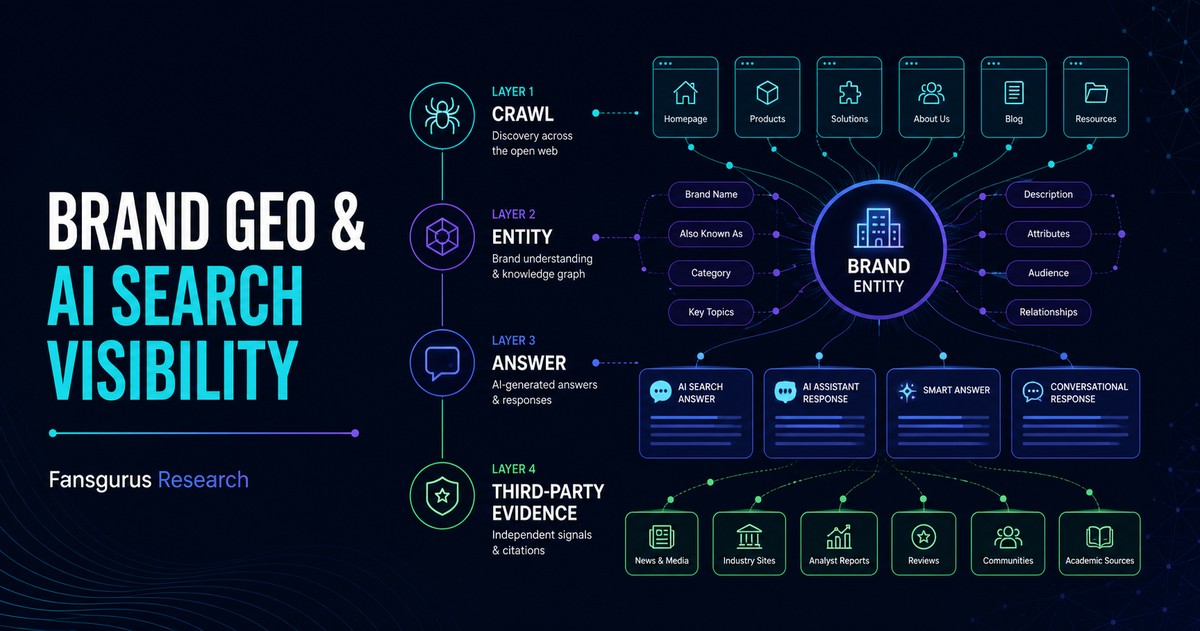
A brand can publish frequently and still remain absent from AI-generated answers because visibility is not one switch. Four layers have to work together: search crawlers must reach and index the page; the brand entity must be described consistently; pages must contain clear answers with evidence; and trustworthy public sources outside the website must confirm the same facts.
Fansgurus helps brands and Web3 teams build compliant public content touchpoints through services such as customer-supplied Quora answers, Reddit posts and comments, X user posts and contextual replies, multilingual YouTube comments, and engagement around original Medium research. These are publishing and participation services. They do not control ChatGPT, Google, Perplexity or any ranking system, and they cannot guarantee indexing, citations, recommendations, traffic or sales.
AI search visibility, generative engine optimization, brand mentions, citations
A collapsed answer is hidden behind an extra click after a moderation action; it is not the same as deletion, low ranking or weak distribution. First open the moderation notification and identify the cited policy. Correct the answer so it directly addresses the question, stands alone without an external link, discloses relevant affiliations and removes repetitive promotion. Then use Appeal in the notification or beneath the collapsed answer. An appeal requests review—it does not guarantee restoration.
Diagnose a collapsed Quora answer, fix relevance, promotion, repetition or formatting issues, and follow Quora’s official appeal path without confusing collapse with low distribution.
Fansgurus helps brands publish customer-supplied comments or answers under a designated Quora question or post. You provide the exact public URL and final publish-ready text; Fansgurus arranges a real active user to post it. This is useful when your team has approved content but needs reliable posting execution. The service starts at one answer, costs $352 per 1,000 answers, and supports up to 10,000 per order.
A relevant Quora answer can place a clear brand viewpoint inside a question that prospects already use for research. Consistent, factual wording may also make the brand entity easier for search engines and AI answer systems to understand. Discovery, indexing, citation, recommendation, ranking and traffic remain controlled by Quora, search engines and AI platforms.
Short answer: upvotes and comments do different jobs on Reddit, and most people buy the wrong one. A vote is a single anonymous signal that decays; a comment is content — it stays on the page, it gets read by everyone who arrives later, it pulls the original poster back to reply, and it is the thing a lurker actually judges the post by. A post sitting at 40 upvotes and 0 comments reads as ignored no matter what the number says. Fansgurus Reddit comments run $285 per 1,000 (service 15918, 60-day guarantee), $310 for the higher-tier version (15919, 90-day guarantee) and $362 for fully custom comment text (16335), with a minimum order of 10. Everything below describes the Real User Services line.
This article covers what a comment does that a vote cannot, the full current price list, which service fits which situation, how ordering works, and — before the CTA — a straight reading of what Reddit's rules actually say, so the decision is made with the whole picture.
This guide provides digital marketing agencies with an actionable framework to identify and select high-quality Facebook growth services, focusing on verifiable 'real user' engagement to maximize client ROI and avoid common pitfalls of fake engagement.
As a digital marketing agency, you understand the critical need for authentic engagement on Facebook. Yet, selecting the right Facebook growth services often feels like navigating a minefield, with constant worries about wasting client budgets on bot accounts and risking account penalties.
This guide equips your agency with the tools to identify and choose Facebook growth services that genuinely deliver real users, ensuring every marketing dollar contributes to verifiable ROI and elevates your clients' social media presence.
The Broken Promise: Why Traditional Facebook Growth Services Fail Agencies
Many digital marketing agencies face a persistent challenge: client Facebook data appears robust with high follower counts, but engagement rates plummet, and actual conversions remain elusive. This disparity often stems from relying on Facebook growth services that provide inauthentic, bot-generated engagement rather than genuine human interaction. These services create a facade of popularity that ultimately delivers zero return on investment for your clients.
The immediate consequence is a wasted marketing budget. Funds allocated to acquiring these so-called followers produce no tangible business value, such as website traffic, leads, or sales. More critically, deploying fake engagement jeopardizes your agency's reputation and client trust. When clients see little to no real-world impact from their social media investment, confidence in your agency's expertise erodes, making contract renewals and new business development significantly harder.
Investing in fake Facebook growth services is like building a house on sand: it might look good initially, but it offers no real value and is destined to collapse, risking your clients' trust and marketing budget.
Beyond the immediate financial and reputational damage, the use of bots and fake accounts can trigger Facebook's algorithms, leading to shadow-banning, reduced organic reach, or even permanent account suspension. This not only reverses any perceived growth but also creates significant hurdles for future legitimate marketing efforts, making it harder to recover and rebuild a client's presence on the platform.
Decoding Authenticity: Standards for 'Real User' Facebook Growth Services
The cornerstone of any effective Facebook growth strategy is securing engagement from real users. For digital marketing agencies, discerning what constitutes a 'real user' and how legitimate services deliver them is paramount. At Fansgurus, we define real users as active, genuine individuals from our platform's own user community who engage with content and profiles through a task reward mechanism. These are not bots or dormant accounts; they are actual people with complete profiles and organic activity.
Identifying truly effective Facebook growth services requires a close look at how they operate. Agencies should prioritize platforms that are transparent about their user acquisition methods, focusing on those that leverage a community of authentic users. This ensures the engagement received is not only stable but also capable of contributing to measurable ROI.
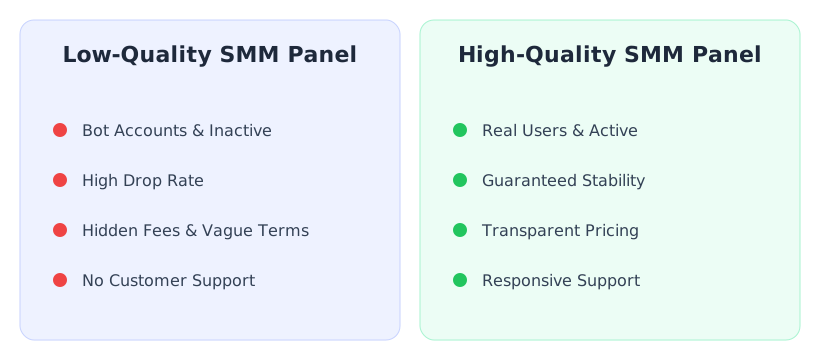
Key Differentiators: Real User Services vs. Fake Engagement
When evaluating Facebook growth services, agencies need a clear framework to distinguish between authentic and inauthentic providers. Here's a quick comparison:
Feature
Hallmarks of Real User Services
Red Flags of Fake Engagement
User Source
From an established, opt-in user community via task rewards (e.g., Fansgurus's global community).
Beyond Vanity Metrics: Linking 'Real Users' to Verifiable Marketing ROI
For digital marketing agencies, the ultimate goal isn't just accumulating followers; it's about generating tangible value for clients. Real Facebook users are the only true drivers of marketing ROI, transforming social media activity into measurable business outcomes. Unlike bots, real users actively view, share, and interact with content, extending organic reach and brand visibility.
High-quality engagement from real users leads to several direct benefits:
Increased Organic Reach: Facebook's algorithms favor content that receives genuine interaction. Real users liking, commenting, and sharing your client's posts signals relevance, pushing content to a broader, organic audience.
Higher Engagement Rates: Authentic interactions translate into better engagement metrics, such as higher click-through rates (CTR) on links, more meaningful discussions in comments, and increased shares to personal networks. These are vital indicators of audience interest.
Improved Conversion Paths: Real users are potential customers. Their engagement can be directed towards specific calls-to-action (CTAs), leading to increased website visits, lead generation, and ultimately, sales. This allows agencies to track precise conversion metrics using tools like Facebook Pixel and Google Analytics.
Actionable Audience Data: Engaged real users provide valuable demographic and behavioral data. This information helps agencies refine targeting, optimize ad campaigns, and personalize future content strategies, directly contributing to more efficient ad spend and higher ROI.
By prioritizing services that deliver real users, agencies can move beyond vanity metrics and present clients with clear, data-backed evidence of social media success, solidifying client trust and demonstrating true marketing value.
Sustaining Growth: High-Quality 'Real Users' for Data Stability and Brand Longevity
For digital marketing agencies, the long-term health and stability of a client's Facebook presence are as crucial as initial growth. Investing in high-quality real Facebook users is not merely a short-term boost; it's a strategic move that underpins consistent data stability and sustainable brand growth. Facebook's sophisticated algorithms are designed to detect and penalize inauthentic behavior. Accounts augmented with bots or fake engagement face severe risks, including reduced visibility, temporary restrictions, or even permanent bans. Real users, generated from our platform's own active user community, ensure compliance with Facebook's guidelines, safeguarding your clients' accounts.
Authentic engagement signals to Facebook that your client's content is valuable, leading to algorithmic favor and enhanced organic reach over time. This creates a virtuous cycle: real interactions lead to more real interactions, fostering a genuinely engaged community around the brand. Furthermore, reputable services understand that some natural attrition can occur. That's why a robust drop protection and refill policy is essential. This policy, based on the inherent quality of real users, ensures that any minor fluctuations in follower counts are addressed, maintaining the long-term data integrity and stability that agencies promise their clients. This commitment to maintaining a healthy follower count, rather than just replacing numbers, reflects a genuine focus on client success.
True Facebook growth means fostering a stable, engaged community with real users, protected by a reliable drop compensation policy, ensuring long-term brand credibility and sustainable marketing ROI.
Agency Playbook: Practical Steps to Select and Manage Facebook Growth Partners
Choosing the right Facebook growth partner is a strategic decision for digital marketing agencies. It directly impacts client satisfaction, campaign performance, and your agency's reputation. Here's a practical playbook to guide your selection and management process:
Define Client Objectives with Precision: Before engaging any service, clarify your client's specific goals. Is it increased brand awareness, lead generation, website traffic, or community engagement? Different objectives might require nuanced growth strategies, even when focusing on real users.
Demand Unwavering Transparency: A reputable Facebook growth service will be completely transparent about its methodologies. Inquire about the source of their users (e.g., an opt-in global user community), delivery mechanisms (e.g., task-reward system), and any potential risks. Avoid services that are vague or make exaggerated claims without clear explanations.
Prioritize Verifiable 'Real User' Metrics: Look for partners who can demonstrate the authenticity of their users. This includes providing insights into user demographics, engagement patterns, and activity on their profiles. Fansgurus, for example, focuses on providing growth from real users from our community, ensuring meaningful interaction and avoiding bots.
Evaluate Drop Protection and Retention Policies: Data stability is crucial. A quality service offers a comprehensive drop protection and refill policy, ensuring that the acquired real users remain engaged over time. This minimizes the need for constant replenishment and guarantees long-term value for your clients.
Assess Agency-Grade Reporting and Automation: For agencies managing multiple clients, efficient reporting and automated processes are indispensable. Seek partners who offer detailed order status updates, progress tracking, and performance reports that can be easily translated into client-facing presentations. Services with robust APIs or dedicated dashboards can significantly streamline your workflow. Fansgurus aims to provide transparent processes and efficient automation to simplify agency operations.
Seek ROI-Driven Consulting and Support: Beyond simply delivering services, the best partners offer strategic guidance on converting social media growth into actual business outcomes. This includes insights into optimizing client content, leveraging new features, and aligning growth with overarching marketing goals.
Start with a Pilot Program: For new partners, consider testing with a smaller package or a pilot campaign. This allows your agency to evaluate the service's claims, monitor the quality of engagement, and verify the delivered ROI before committing to larger-scale projects.
By meticulously following these steps, your agency can forge effective partnerships that secure genuine Facebook growth, maximize client marketing budgets, and consistently deliver high, verifiable ROI.
Frequently Asked Questions
What are 'real users' in the context of Facebook growth services?
Real users are genuine, active individuals from a platform's own community who engage with your content or profile through a transparent task reward mechanism. They have complete profiles, demonstrate organic activity, and contribute to authentic engagement.
How can agencies verify that a Facebook growth service provides real users?
Agencies can verify authenticity by examining user profiles for completeness and activity, monitoring engagement patterns for natural variation, and observing long-term retention rates. Transparent service providers will also offer detailed reports on user sources and delivery methods.
Why is it risky to use services that provide fake Facebook followers or likes?
Fake followers and likes provide no real engagement, waste marketing budgets, and can damage your client's brand reputation. More critically, they can trigger Facebook's algorithms, leading to reduced organic reach, content suppression, or even account suspension.
How do real users contribute to a higher marketing ROI on Facebook?
Real users contribute to ROI by increasing organic reach, driving higher engagement rates (comments, shares, clicks), and ultimately leading to more conversions like website visits and sales. Their authentic interactions provide valuable data for optimizing future campaigns.
What should agencies look for in a drop protection or refill policy?
A strong drop protection policy ensures long-term data stability by offering refills for any natural attrition of users acquired. It should be transparent about its terms, based on the quality of real users, and designed to maintain consistent follower counts over time.
Can Facebook growth services offer tailored solutions for different client objectives?
Yes, reputable Facebook growth services often provide tailored solutions. Agencies should clearly communicate specific client objectives, such as increasing brand awareness, driving website traffic, or boosting specific post engagement, to ensure the service aligns with and optimizes for these goals.
What reporting capabilities should agencies expect from a Facebook growth partner?
Agencies should expect detailed and transparent reporting, including real-time order status, progress tracking, and comprehensive performance metrics. This allows for efficient client project management and clear, data-backed reporting to clients.
Ready to ensure your client's Facebook marketing budget translates into verifiable ROI? Explore our real user-based Facebook growth solutions and transform your clients' social media presence today. Visit Fansgurus.com to learn more.